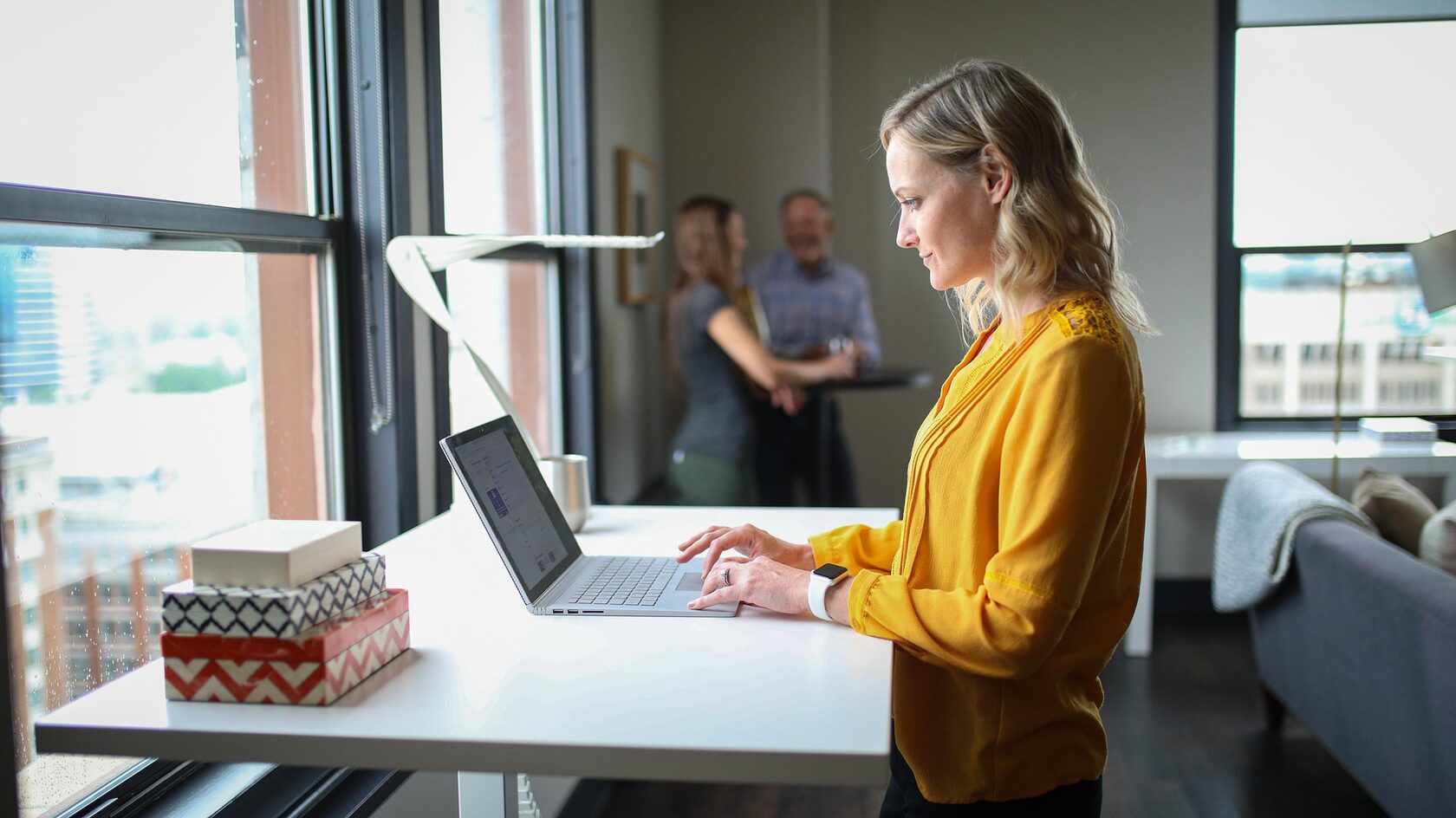
You bought the standing desk because the science on sitting scared you. You raise it most mornings, you feel slightly more virtuous, and by late afternoon your legs ache, your lower back is talking to you, and your brain is done anyway. The nagging question you have not said out loud: is this expensive piece of furniture actually doing anything, or did you just buy permission to keep working the same way you always have?
Here is the short version. A standing desk changes your posture. It does not change your physiology very much. Standing is not movement, and swapping a chair for a stand is a posture change dressed up as an intervention. The desk is not useless, but it is quietly the wrong tool for the job most people bought it to do, and used the way most people use it, it can add problems of its own.
What does standing actually do to the numbers?
Start with the claim that sold you the desk: standing burns more calories and undoes the metabolic cost of sitting. It does neither in any amount that matters.
A 2018 meta-analysis in the European Journal of Preventive Cardiology pooled 46 studies comparing sitting, standing, and walking. Standing burned about 0.15 more calories per minute than sitting. Stand for three extra hours a day and you spend roughly 50 to 60 additional calories, the caloric value of a single apple. Twenty-four-week workplace trials with standing desks show no meaningful weight change, even though some metabolic markers nudge in the right direction. As a fat-loss or energy-expenditure tool, the standing desk does almost nothing.
Glucose is where standing looks better, and it is worth being precise here because this is the real effect. Studies show that alternating between sitting and standing lowers post-meal glucose by around 11 percent versus staying seated, and one work-based study found the blood glucose excursion after eating dropped meaningfully across an afternoon of standing-based work compared with sitting. That is a genuine signal. But notice the mechanism: the benefit comes from not holding one position, from the muscle staying engaged, not from the magic of vertical. It is a movement effect that standing partially captures, not a standing effect.
Why does standing all day backfire?
The part the marketing skips: prolonged standing is its own stressor, not a neutral default.
A 2024 University of Sydney study tracking a large cohort found that standing more did not improve heart health compared with sitting, and that orthostatic circulatory risk climbed by roughly 11 percent for every additional 30 minutes of standing beyond two hours a day. Standing for long stretches pools blood in the lower limbs and is associated with a higher risk of varicose veins and deep vein thrombosis. Occupational research on people who stand for a living, teachers, nurses, retail staff, shows several times the odds of vein problems compared with those who stand less. Add the back and foot pain that regular standing-desk users report, and the picture is clear: eight hours vertical is not the antidote to eight hours seated. It is a different load with a different bill.
There is a cognitive version of the same trap. Standing raises cerebral blood flow modestly, on the order of 10 percent, which is why short bouts can feel sharpening. But the evidence does not show that standing desks make you think better over a full day, and prolonged standing can mildly degrade performance on harder tasks once the discomfort starts competing for attention. The felt sense of being more alert standing is real for the first stretch and stops being true by hour three.
What is the real metric here?
The trap is that the desk gives you a posture you can see and feel virtuous about, while hiding the variable that actually moves your afternoon: how long your body holds any single position without interruption. A person who stands rigidly for four hours has broken up nothing. The desk becomes an alibi for stillness, and the hidden biological debt of an unmoving afternoon keeps accruing whether you rack it up sitting or standing.
Do not track hours-standing, which is what the desk tempts you to optimize. Track two things instead. First, your own afternoon clarity on a 1 to 10 scale across two weeks, comparing days you actually broke up the sitting or standing against days you held one position. Second, if you wear a continuous glucose monitor or a wearable, watch the post-lunch curve and the multi-day resting-heart-rate and HRV trend, not a single reading and not the composite readiness score, which is the least trustworthy layer. The number that matters is the trend in how your afternoon holds up, not the position of your desk.
What actually moves the needle?
The honest reframe: the desk is a small piece of your performance infrastructure, not the intervention. The intervention is interrupting stillness, and that is a nervous-system-first lever the morning workout does not cover. Training raises the biological ceiling. The unbroken afternoon runs down recovery capacity underneath it. You cannot out-train an eight-hour sit or an eight-hour stand.
Here is the minimum-effective version, under 15 minutes a day of actual change.
First, use the desk as a stop, not a state. Alternate. A rough rule is around 30 minutes seated, then a stretch standing, and every transition is a cue to move for a minute, not just to change altitude. The alternation is the point, not the standing.
Second, break the bout with the room you are already in. Stand up and move for one to two minutes roughly every half hour. Chair stands, a lap to refill water, a standing or walking call. Simple chair stands do about as much for post-meal glucose as walking, so this needs no gym and no gym clothes.
Third, anchor one break to lunch. A two to ten minute walk after your midday meal blunts the biggest glucose swing of the day, which is the one that lands as the 3pm fade. That single walk will do more for your afternoon than raising the desk ever did.
Map where your system is carrying load
If your afternoons cost more than they used to and the desk has not fixed it, the desk was never the variable. The question is where your system is actually carrying unmeasured load, movement being one input among several. Our free self-assessment at osapiens.expert/how-i-feel is a quick way to map that baseline across the systems that decide how your afternoon holds up, so you spend attention on the lever that is actually binding rather than the one that came with a warranty.
If the afternoon crash persists after weeks of breaking up your sitting, or you have persistent unexplained fatigue, low mood that has settled in, or loud snoring, gasping, or breathing pauses in your sleep, that is a physician conversation, not a furniture one. New or one-sided leg pain or swelling should go to a doctor promptly rather than to a walking break.
This is education, not medical advice. O!Sapiens provides coaching and education, not diagnosis or treatment. Vlad Andreev is a mental health educator and executive coach, founder of O!Sapiens, not a licensed medical professional.