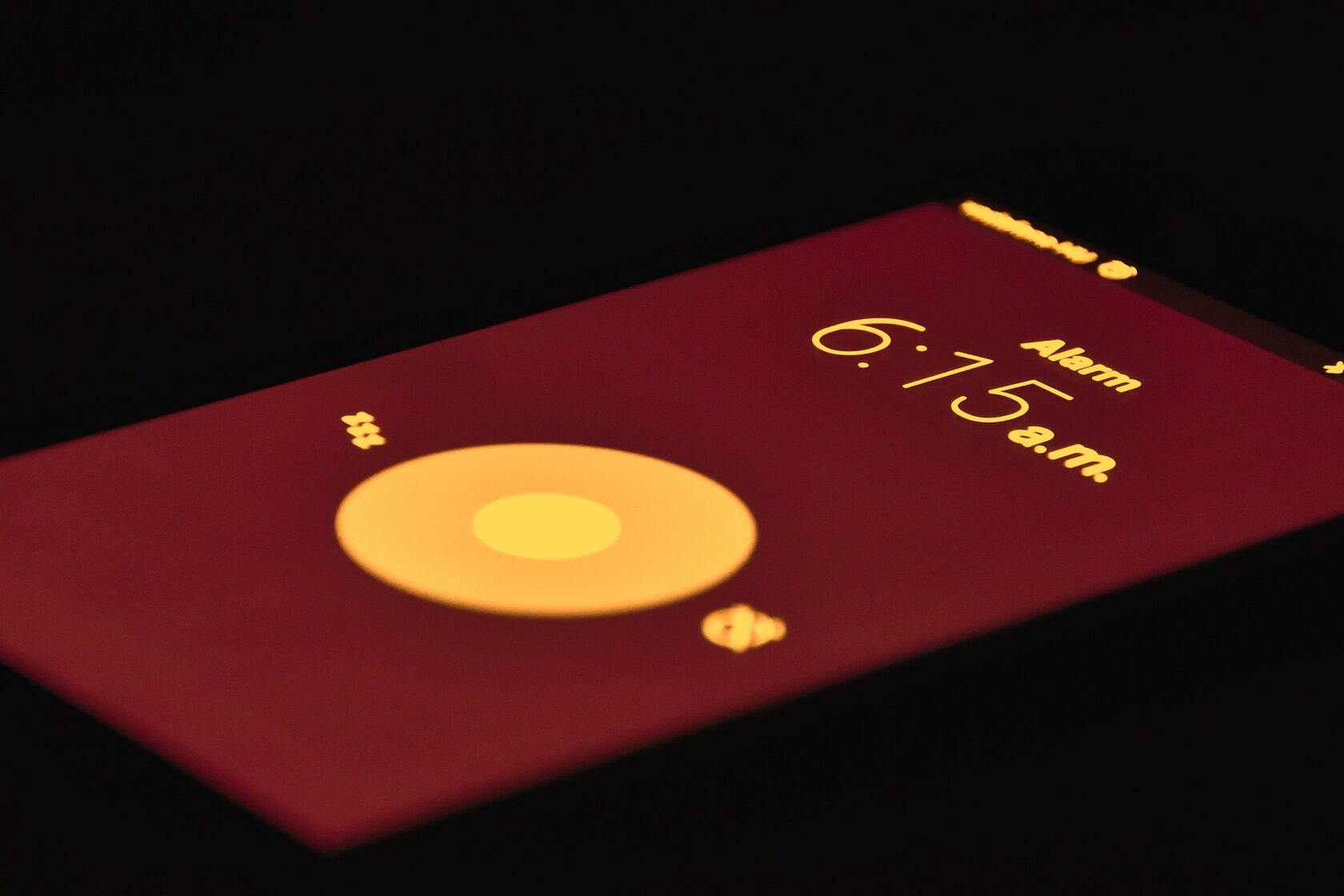
You set the alarm for 6:00 with every intention of being up. Then it goes off, and some part of you that has not agreed to anything reaches over and buys nine more minutes. Then nine more. By the time you are actually vertical it is 6:30, you have started the day three times instead of once, and the first hour feels like wading. You can still perform. It just costs more than it used to.
If that is your morning, you have probably been told the fix is simple: stop snoozing, put the phone across the room. The instruction is popular and mostly wrong about the important part. The snooze button is not the problem; chronic reliance on it is a readout that your sleep timing or sleep debt is off, and the button is just where the debt shows up.
That distinction matters, because the two readings lead to opposite actions. One tells you to white-knuckle a habit. The other tells you to look at the system underneath it.
Why do so many high performers snooze?
Start with how normal this is, because most people assume they are the exception. In a 2025 study out of Mass General Brigham, published in Scientific Reports, researchers looked at more than 3 million sleep sessions from over 21,000 people worldwide. More than half of all sessions, 55.6 percent, ended with a snooze alarm. The average snoozer pressed it 2.4 times for about 11 minutes. Around 45 percent were heavy users who snoozed on more than 80 percent of mornings, losing roughly 20 minutes a day to the ritual.
One finding is worth sitting with: longer sleep sessions, over nine hours, were more likely to end in snoozing than normal-length ones. More time in bed did not mean an easier exit. That is the first clue that snoozing is information about the shape of your sleep, not a discipline failure.
What is actually happening when you snooze?
The last stretch of your night is not filler. The hours before your alarm are rich in REM sleep, the stage that consolidates learning and does most of the overnight work of emotional regulation. That is the sleep that lets you walk into a hard meeting without your reactivity running the room.
When the first alarm fires, it usually pulls you up out of that REM-heavy territory. Hit snooze, and you drop back down, but not into real sleep. You get a shallow, fragmented version, interrupted again a few minutes later by the next alarm. Your nervous system keeps getting yanked toward waking and shoved back, which is not the same as resting. This is the mechanism behind the wading feeling, and it is a nervous-system-first cost: you are asking your brain to keep starting and aborting the wake-up sequence, and each abort has a price.
Here is where the popular advice falls apart. A 2024 study in the Journal of Sleep Research, titled "Is snoozing losing?", actually measured this. Thirty minutes of snoozing did not impair cognitive performance on final waking, and in several tests it slightly improved it. The snooze cost about six minutes of sleep, but it kept people from being ripped straight out of deep slow-wave sleep, which produces the heaviest grogginess of all. A short, contained snooze can be a gentler exit ramp, not a crime.
So both things are true. Fragmenting your REM-rich last hour every single day is real physiological erosion. A bounded snooze on a given morning is close to harmless and occasionally helps. The variable is not the button. It is whether snoozing is an occasional tool or a daily dependency.
What signal is the snooze button actually giving you?
Treat the snooze the way you would treat any recurring line item: not as a moral event, but as data. The question is not "am I weak," it is "why does my body refuse the exit I scheduled."
Usually the answer is one of three things. Your total sleep is short, so you are in debt and grabbing minutes anywhere. Your sleep timing is misaligned, so the alarm lands in deep sleep instead of light, and waking feels like being dragged. Or your schedule is irregular, weekdays versus weekends swinging by hours, so your body never learns when morning is. The Mass General Brigham data lined up with exactly this: erratic sleep patterns tracked with heavier snooze use.
None of those is fixed by willpower at 6:00 a.m. They are fixed upstream, the night before and the week before. This is the difference between performance infrastructure and a coping habit. The snooze is the coping habit. The infrastructure is your sleep timing and consistency, and that is where recovery capacity is actually built or lost.
How to test this on yourself
You do not need another device. Run a two-week read.
Track two things each morning: how many times you snoozed, and your own clarity in the first working hour on a 1 to 10 scale. If you wear something, glance at overnight resting heart rate and HRV as a background trend, not a daily verdict. One flat morning is noise. The signal is a pattern, a resting heart rate that stays up and an HRV sitting roughly 20 to 30 percent below your own baseline for several days running. Composite readiness scores are the least trustworthy layer here, so weight them last.
What you are looking for is whether heavy snooze mornings and low-clarity first hours track with short or irregular nights. If they do, you have found your lever, and it is not the alarm.
The minimum-effective fix
This is not a morning routine. It is three adjustments, most of them made the night before.
First, anchor your wake time. The same time every day, weekends included within about an hour, is the single strongest input. A consistent wake time surfaces you out of lighter sleep instead of deep sleep, which is most of what people are trying to buy with the snooze. Cost: zero minutes, one decision.
Second, protect the exit. Get real light and a little movement into the first few minutes, open a blind, stand up, walk to water. Light suppresses residual melatonin and raises cerebral blood flow, which clears the fog faster than lying still and negotiating with the alarm. If you use caffeine, having it earlier in the wake-up window shortens the drag, keeping it well away from the evening.
Third, if you are going to snooze, bound it. One alarm, one snooze, capped. The damage is in the open-ended, five-rounds version, not in a single soft landing. And if you consistently need 20 minutes of snooze to face the day, do not fight that at dawn. Move your bedtime earlier, hold your wake time steady for two weeks, then check the number again.
Map where your system is carrying load
If mornings have quietly gotten harder, the snooze button is one visible symptom of a system running a little short on recovery. It is worth knowing where else that load is sitting before it starts showing up in your afternoons and your decisions. The free self-assessment at osapiens.expert/how-i-feel is a fast way to map where your system is carrying load across sleep, stress, and recovery, so you are working on the upstream cause instead of the 6 a.m. symptom.
One caveat that is not optional. If you sleep a full, regular night and still cannot wake up, or you snore, gasp, or stop breathing in your sleep, or you feel persistently exhausted or flat for weeks regardless of what you do at bedtime, that is not a snooze-button problem. Possible sleep apnea, depression, and unexplained fatigue are medical questions and belong with a physician, not a productivity tweak. Get them looked at.
Everything above is education, not medical advice or treatment. It is meant to help you read your own signals and ask better questions, not to diagnose anything. Vlad Andreev is a mental health educator and executive coach and the founder of O!Sapiens.