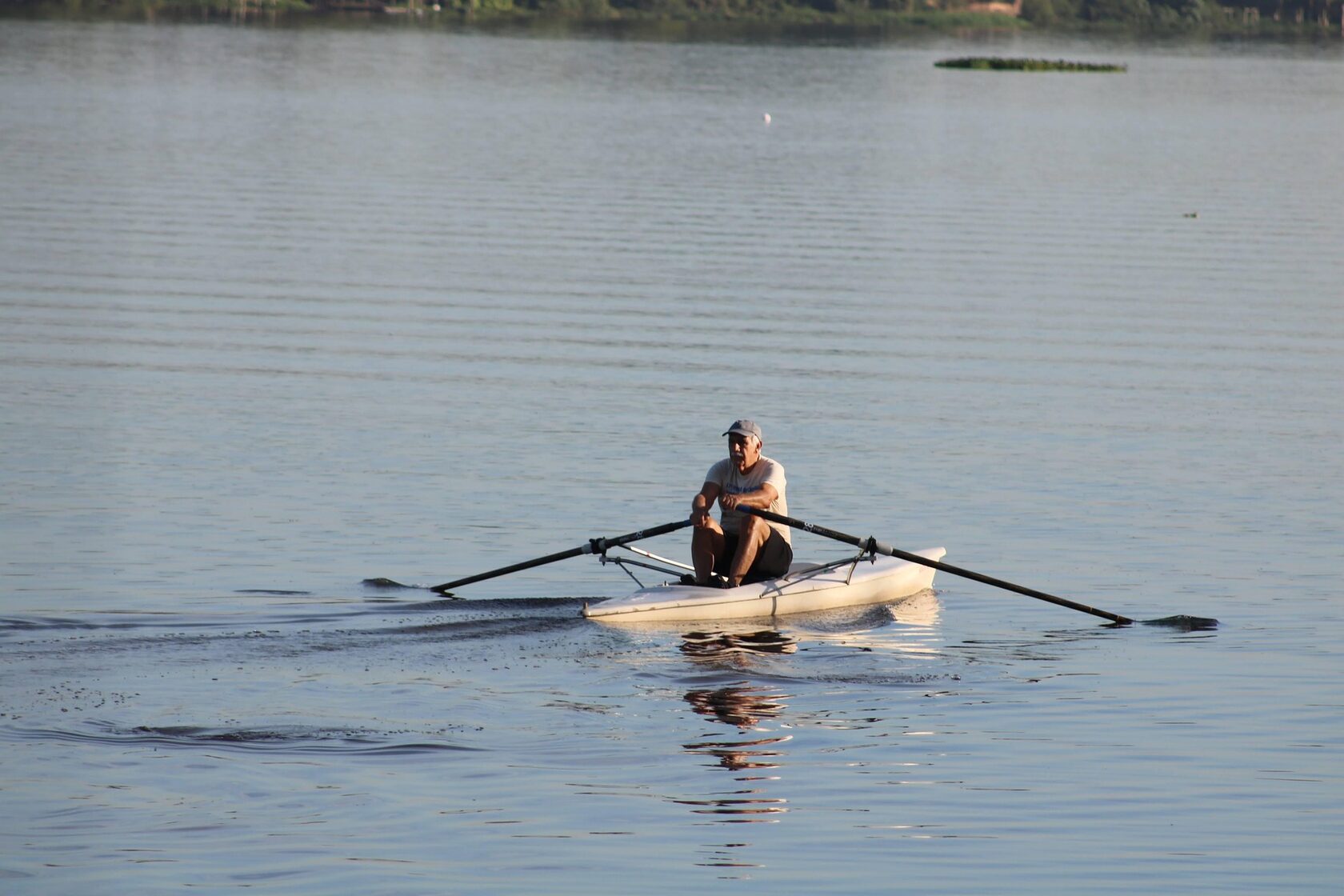
You are not worried about dying young. That is not the fear. The fear, if you name it honestly, is subtler and closer: that at some point your body outlives your edge. That you keep the years but lose the sharpness, the stamina, the ability to make good calls late in a hard day. You have watched it happen to people a decade or two ahead of you. Still technically fine. Clearly not who they were.
Most of the longevity conversation answers the wrong question. It optimizes for how long. The operator's question is different: how long do I stay fully capable.
Healthspan is the number of years you stay physically and cognitively sharp enough to operate at your standard; lifespan is just how long the heart keeps beating. The gap between the two is where most people quietly lose the game, and that gap is getting wider, not narrower.
Why is living longer not the same as staying sharp?
Because survival and capability are two different systems, and modern medicine has gotten far better at the first than the second.
A Global Burden of Disease study published in The Lancet Public Health in July 2026 put hard numbers on this. Between 1990 and 2023 global life expectancy climbed from under 65 years to nearly 74. But healthy life expectancy, the years lived without significant disease or disability, rose more slowly, from about 56 to 63. The gap between them, what researchers call the morbidity gap, widened from 8.8 years to 10.7 years. People are now spending an average of 14.5 percent of their lives in poor health, and the trend is up.
Here is the part that should get your attention: the United States had the largest gap of any nation, around 14 years spent in poor health, with Australia and Canada close behind. The wealthiest, most medically advanced countries are the ones adding the most low-capacity years. We are extremely good at keeping people alive through conditions that used to kill them. We are much worse at keeping them functional.
This is the mechanism behind the fear. Medicine extends the tail. It does not, on its own, extend the peak. Those are separate problems with separate solutions, and only one of them is on your side of the table.
What is actually eroding underneath?
Healthspan does not fall off a cliff. It erodes, which is exactly why capable people miss it. The decline runs at roughly one percent a year in several key systems from your thirties onward, slow enough to hide behind good habits and adrenaline, until the compounding shows.
Aerobic capacity is the clearest example. VO2 max, the ceiling on how much oxygen your system can actually use, drops about ten percent per decade in a sedentary adult after thirty. That is not just a fitness number. It is one of the strongest single predictors of all-cause mortality on record, and it maps closely onto functional capacity: the reserve you draw on to climb stairs, recover from a bad week, or hold judgment together at hour eleven. When your aerobic engine shrinks, the biological ceiling on everything downstream comes down with it.
Muscle and strength follow the same curve. Grip strength, of all things, turns out to be one of the most reliable aging biomarkers we have. A meta-analysis across more than fifty studies found low grip strength predicted disability, hospitalization, and mortality, and the link held even after adjusting for age, sex, body mass, and existing disease. In 2025 an international expert panel formally proposed grip strength and muscle mass among a short list of biomarkers to track aging in intervention trials. These are not vanity metrics. They are proxies for whether your body is accumulating capacity or quietly shedding it.
This is hidden biological debt in its purest form. Nothing on the surface looks wrong while the reserve underneath thins, and the bill arrives later, all at once, as a decade of lost capability rather than a bad quarter.
What can I actually measure?
You do not need a longevity clinic to see the trend. Three functional markers carry most of the signal.
Aerobic capacity, tracked as VO2 max. Most modern wearables estimate it. The absolute number matters less than the direction over months, and whether you sit above or below the average for your age.
Strength, tracked crudely as grip or, better, as whether your working weights are holding or slipping year over year. Losing ground here is one of the earliest honest signals of erosion.
Recovery capacity, tracked as the multi-day trend in resting heart rate and HRV, not the daily readout. A resting heart rate drifting upward over months, or an HRV baseline sliding down, is your recovery system telling you the reserve is shrinking. Act on a sustained shift, roughly 20 to 30 percent below your own baseline held for several days, not on a single off morning.
The point of measuring is not a scorecard. It is to catch physiological erosion while it is still a trend you can bend, rather than a diagnosis you react to.
What does the signal mean, and what doesn't it?
A single low number is noise. One bad VO2 max estimate, one weak week in the gym, one rough night of HRV tells you almost nothing. The signal is always the trend, held over weeks. Healthspan is a slope, not a snapshot, and you manage it the way you manage any slow-moving liability: by watching the direction, not the daily print.
And to be clear about scope: unexplained fatigue, breathlessness out of proportion to effort, a sharp unexplained drop in strength, or persistent low mood are not aging. They are reasons to see a physician. This is education, not diagnosis, and the markers here are questions to bring to a doctor, not a substitute for one.
What's the minimum that actually protects capacity?
You do not need a second job managing your biology. You need a small number of high-leverage inputs held consistently, because consistency is what bends a multi-year slope.
Defend the aerobic engine. Two sessions a week, roughly 20 to 40 minutes, one easier and conversational, one genuinely hard in short intervals. This is the single most efficient lever on VO2 max and the reserve underneath it.
Load your muscles. Two short strength sessions a week, compound movements, enough resistance that the last few reps are real work. This is what tells the body to keep capacity rather than shed it. Fifteen focused minutes beats an hour you won't repeat.
Protect recovery as infrastructure, not indulgence. Sleep is where the maintenance happens; a consistent wake time and a genuine wind-down are non-negotiable performance systems, not self-care. Recovery capacity is trainable, and it is what lets the rest of the work compound instead of just draining you.
None of this is new or exotic. That is the point. The reason healthspan erodes in high performers is almost never ignorance. It is that the maintenance keeps losing to the next quarter, year after year, until the compounding shows.
If you want to see where your own system is carrying load right now, O!Sapiens runs a free self-assessment at osapiens.expert/how-i-feel. It takes a few minutes and maps where your reserve is thinning across sleep, recovery, movement, and cognitive load, so you are working from a baseline instead of a guess. No pitch, just a clearer picture of where you stand.
You are not trying to live forever. You are trying to stay fully yourself for as long as the years last. Those are different projects. Only one of them is worth optimizing, and it is the one almost nobody is measuring.
This article is educational and reflects a coaching and mental-health-education perspective. It is not medical advice, diagnosis, or treatment. Persistent or worsening symptoms, including unexplained fatigue, breathlessness, or low mood, warrant assessment by a qualified physician. Vlad Andreev is a mental health educator and executive coach, founder of O!Sapiens.
Most of the longevity conversation answers the wrong question. It optimizes for how long. The operator's question is different: how long do I stay fully capable.
Healthspan is the number of years you stay physically and cognitively sharp enough to operate at your standard; lifespan is just how long the heart keeps beating. The gap between the two is where most people quietly lose the game, and that gap is getting wider, not narrower.
Why is living longer not the same as staying sharp?
Because survival and capability are two different systems, and modern medicine has gotten far better at the first than the second.
A Global Burden of Disease study published in The Lancet Public Health in July 2026 put hard numbers on this. Between 1990 and 2023 global life expectancy climbed from under 65 years to nearly 74. But healthy life expectancy, the years lived without significant disease or disability, rose more slowly, from about 56 to 63. The gap between them, what researchers call the morbidity gap, widened from 8.8 years to 10.7 years. People are now spending an average of 14.5 percent of their lives in poor health, and the trend is up.
Here is the part that should get your attention: the United States had the largest gap of any nation, around 14 years spent in poor health, with Australia and Canada close behind. The wealthiest, most medically advanced countries are the ones adding the most low-capacity years. We are extremely good at keeping people alive through conditions that used to kill them. We are much worse at keeping them functional.
This is the mechanism behind the fear. Medicine extends the tail. It does not, on its own, extend the peak. Those are separate problems with separate solutions, and only one of them is on your side of the table.
What is actually eroding underneath?
Healthspan does not fall off a cliff. It erodes, which is exactly why capable people miss it. The decline runs at roughly one percent a year in several key systems from your thirties onward, slow enough to hide behind good habits and adrenaline, until the compounding shows.
Aerobic capacity is the clearest example. VO2 max, the ceiling on how much oxygen your system can actually use, drops about ten percent per decade in a sedentary adult after thirty. That is not just a fitness number. It is one of the strongest single predictors of all-cause mortality on record, and it maps closely onto functional capacity: the reserve you draw on to climb stairs, recover from a bad week, or hold judgment together at hour eleven. When your aerobic engine shrinks, the biological ceiling on everything downstream comes down with it.
Muscle and strength follow the same curve. Grip strength, of all things, turns out to be one of the most reliable aging biomarkers we have. A meta-analysis across more than fifty studies found low grip strength predicted disability, hospitalization, and mortality, and the link held even after adjusting for age, sex, body mass, and existing disease. In 2025 an international expert panel formally proposed grip strength and muscle mass among a short list of biomarkers to track aging in intervention trials. These are not vanity metrics. They are proxies for whether your body is accumulating capacity or quietly shedding it.
This is hidden biological debt in its purest form. Nothing on the surface looks wrong while the reserve underneath thins, and the bill arrives later, all at once, as a decade of lost capability rather than a bad quarter.
What can I actually measure?
You do not need a longevity clinic to see the trend. Three functional markers carry most of the signal.
Aerobic capacity, tracked as VO2 max. Most modern wearables estimate it. The absolute number matters less than the direction over months, and whether you sit above or below the average for your age.
Strength, tracked crudely as grip or, better, as whether your working weights are holding or slipping year over year. Losing ground here is one of the earliest honest signals of erosion.
Recovery capacity, tracked as the multi-day trend in resting heart rate and HRV, not the daily readout. A resting heart rate drifting upward over months, or an HRV baseline sliding down, is your recovery system telling you the reserve is shrinking. Act on a sustained shift, roughly 20 to 30 percent below your own baseline held for several days, not on a single off morning.
The point of measuring is not a scorecard. It is to catch physiological erosion while it is still a trend you can bend, rather than a diagnosis you react to.
What does the signal mean, and what doesn't it?
A single low number is noise. One bad VO2 max estimate, one weak week in the gym, one rough night of HRV tells you almost nothing. The signal is always the trend, held over weeks. Healthspan is a slope, not a snapshot, and you manage it the way you manage any slow-moving liability: by watching the direction, not the daily print.
And to be clear about scope: unexplained fatigue, breathlessness out of proportion to effort, a sharp unexplained drop in strength, or persistent low mood are not aging. They are reasons to see a physician. This is education, not diagnosis, and the markers here are questions to bring to a doctor, not a substitute for one.
What's the minimum that actually protects capacity?
You do not need a second job managing your biology. You need a small number of high-leverage inputs held consistently, because consistency is what bends a multi-year slope.
Defend the aerobic engine. Two sessions a week, roughly 20 to 40 minutes, one easier and conversational, one genuinely hard in short intervals. This is the single most efficient lever on VO2 max and the reserve underneath it.
Load your muscles. Two short strength sessions a week, compound movements, enough resistance that the last few reps are real work. This is what tells the body to keep capacity rather than shed it. Fifteen focused minutes beats an hour you won't repeat.
Protect recovery as infrastructure, not indulgence. Sleep is where the maintenance happens; a consistent wake time and a genuine wind-down are non-negotiable performance systems, not self-care. Recovery capacity is trainable, and it is what lets the rest of the work compound instead of just draining you.
None of this is new or exotic. That is the point. The reason healthspan erodes in high performers is almost never ignorance. It is that the maintenance keeps losing to the next quarter, year after year, until the compounding shows.
If you want to see where your own system is carrying load right now, O!Sapiens runs a free self-assessment at osapiens.expert/how-i-feel. It takes a few minutes and maps where your reserve is thinning across sleep, recovery, movement, and cognitive load, so you are working from a baseline instead of a guess. No pitch, just a clearer picture of where you stand.
You are not trying to live forever. You are trying to stay fully yourself for as long as the years last. Those are different projects. Only one of them is worth optimizing, and it is the one almost nobody is measuring.
This article is educational and reflects a coaching and mental-health-education perspective. It is not medical advice, diagnosis, or treatment. Persistent or worsening symptoms, including unexplained fatigue, breathlessness, or low mood, warrant assessment by a qualified physician. Vlad Andreev is a mental health educator and executive coach, founder of O!Sapiens.