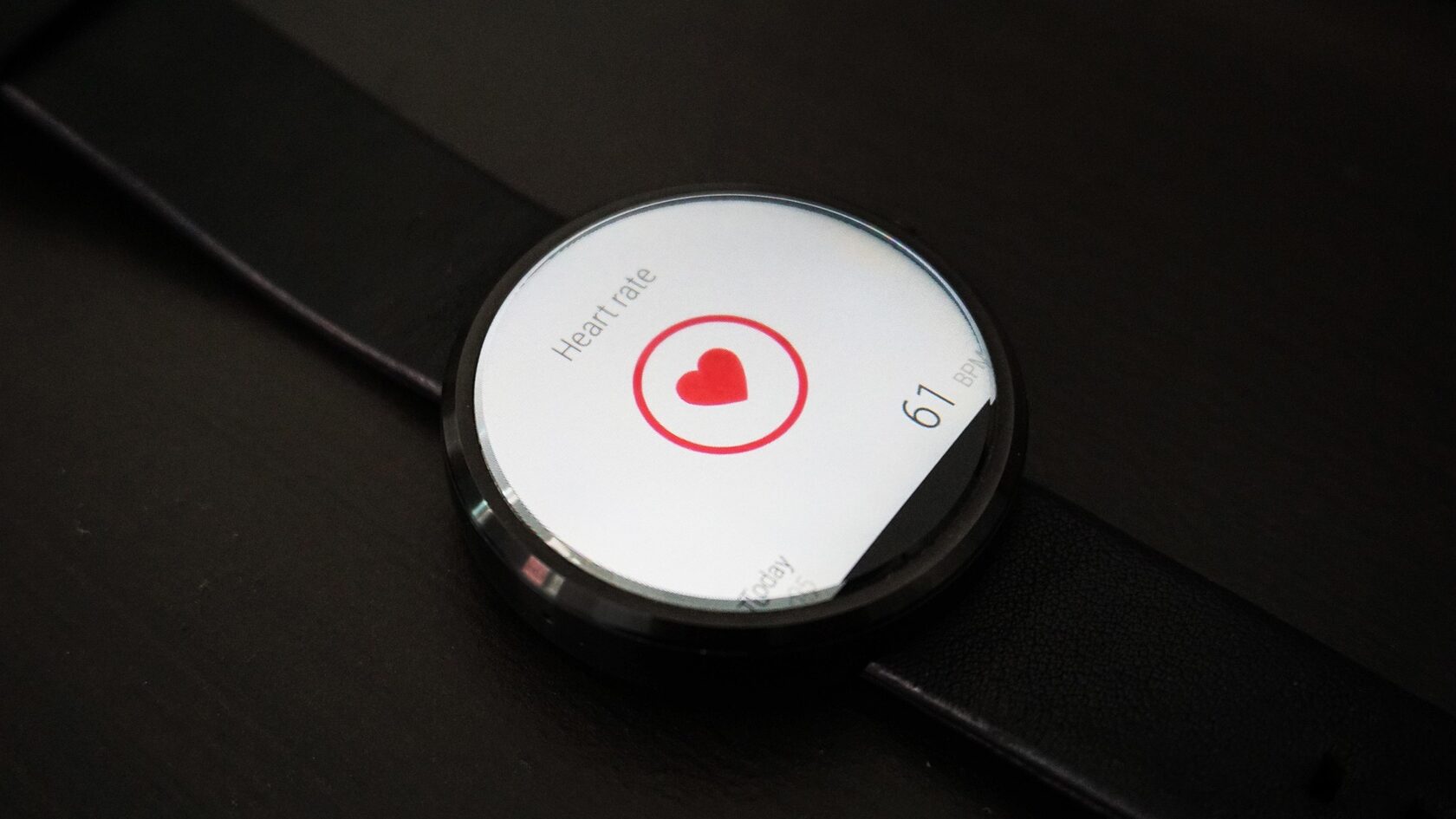
You opened the app before you were fully awake. The number was down again. Not catastrophically, but enough to sit with you through your first two meetings, a quiet tax on attention you didn't ask for. You are not sick. You slept a normal amount. But the readiness score says amber, and now part of your bandwidth is spent managing a metric instead of using it.
Here is the one-line version, the part worth keeping: heart rate variability is a readout of how much reserve your nervous system has right now, not a grade on how well you are living. Low HRV tells you your body is spending more than it is recovering. It does not tell you why, and it does not tell you to panic.
Most executives meet HRV backwards. They treat a single low morning as a diagnosis and a single high morning as permission. Both readings are noise until you know how to read the trend. This is a nervous-system-first metric, and it rewards interpretation over reaction.
What is HRV actually measuring?
HRV is the variation in the time between consecutive heartbeats, measured in milliseconds. A healthy heart does not tick like a metronome. The gaps between beats flex constantly as your autonomic nervous system negotiates between two branches: the sympathetic (mobilize, push, respond) and the parasympathetic (recover, digest, stand down). More variation generally means the parasympathetic branch has room to operate. Less variation means the system is holding you in a mobilized state, even when nothing in the room requires it.
The reason this matters for your job, not just your health, sits in a framework called neurovisceral integration. Vagally-mediated HRV reflects the functional coordination between your prefrontal cortex and the circuits that control your heart. In plain terms, the same regulatory capacity that lets your heart rate flex is tied to the part of your brain that runs deliberate judgment, impulse control, and flexible thinking. When vagal tone drops, you are not just less recovered. You are operating with less of the machinery that produces good decisions. A 2026 exploratory study found higher perceived stress and burnout were negatively associated with executive cognitive performance, and HRV is one of the cleaner windows into that relationship.
Chronic stress does something specific here. It keeps the sympathetic branch dominant and suppresses the vagal, parasympathetic signal, which shows up as a persistent reduction in the high-frequency component of HRV. This is what physiological erosion looks like on a chart: not a crash, a slow flattening. The system stops flexing because it never gets the signal that the threat has passed.
What can you actually observe?
The observable signal is a trend, not a morning. And this is where most people, and most devices, mislead you.
Raw sensor accuracy is largely solved. ECG-validated testing puts Oura Gen 4's HRV concordance around 0.99, WHOOP near 0.94, Garmin around 0.87, Polar around 0.82. The hardware on your wrist or finger is measuring the beats well enough. The problem is the layer on top: the proprietary "readiness" or "recovery" score. Two devices worn on the same night can produce readiness numbers more than 20 points apart, and no manufacturer discloses how the score is weighted. You are not comparing your recovery to itself. You are comparing two opaque algorithms and calling the difference a signal.
There is also a warm-up cost most people skip. Roughly two weeks of consistent wear are needed before your daily scores mean anything, because the device is building your personal baseline. HRV is only interpretable relative to you. Absolute numbers between two people are close to meaningless, since HRV varies widely by individual and declines with age as sympathetic tone rises and vagal tone falls. Your 45 is not someone else's 45.
How should you read a low number?
Here is the interpretation rule that saves you from reacting to noise: one low morning is weather. A sustained drop is climate.
A single reading below your baseline, after a late dinner, a glass of wine, a hard workout, or a short night, is expected and uninformative. The signal worth acting on is a drop of roughly 20 to 30% below your personal baseline that holds for three to four days, especially when it pairs with an elevated resting heart rate and the subjective sense that you are not bouncing back. That combination is your nervous system telling you the load is accumulating faster than you are clearing it. That is hidden biological debt showing up on an instrument before it shows up in your calendar.
The inverse confusion is just as costly. A high HRV is not always good, and a low one is not always bad. HRV can read low during productive adaptation and artificially high in genuine depletion. The number is a prompt to look at context, not a scoreboard to win.
One boundary matters more than any protocol here. If your HRV is chronically suppressed and you also have loud snoring, gasping or witnessed pauses in your sleep, persistent unexplained fatigue, or a low mood that has lasted weeks, that is not a recovery-optimization problem. Untreated sleep apnea, depression, thyroid and cardiac conditions all move HRV, and they need a physician, not an app. The metric can flag something real. It cannot diagnose it, and neither can this article.
What is the minimum useful protocol?
You do not need a new wellness system. You need three habits that cost minutes and turn HRV from a source of anxiety into performance infrastructure.
First, read the trend, not the day. Give the app four minutes a week, not four minutes a morning. Look at the seven-day rolling direction. A single amber morning changes nothing about your schedule. A five-day slide is worth a conversation with yourself about load.
Second, act on the one lever with the most direct effect on vagal tone: slow breathing. Five minutes at roughly five and a half to six breaths per minute, with the exhale longer than the inhale, is one of the most reliable ways to raise parasympathetic activity in real time. Done before a high-stakes meeting or at the end of the day, it is a deliberate stand-down signal to a system that has forgotten how to send its own.
Third, protect the input that moves HRV the most: your sleep and your last two hours before it. Alcohol, late heavy meals, and a hard evening workout are the three most common reasons a driven person wakes up to a low number and blames their character. It is not discipline. It is physiology, and it is fixable without heroics.
That is the whole protocol. Trend, breath, and the last two hours of your day. Fifteen minutes a week, not another thing to fail at.
Map where your system is carrying load
If you have been staring at a recovery score without knowing what it is actually telling you, that is the interpretation gap the whole industry profits from. Before you optimize anything, it helps to see where your load is concentrated. The free O!Sapiens self-assessment at osapiens.expert/how-i-feel maps where your system is carrying load across the domains that drive HRV, so a number on a screen becomes a picture you can act on. It takes a few minutes and it is a baseline, not a verdict.
You cannot out-discipline a dysregulated nervous system. But you can learn to read it, and reading it well is the difference between reacting to noise and protecting the recovery capacity your judgment runs on.
This is education, not medical advice. O!Sapiens does not diagnose, treat, or provide therapy. If you notice persistent symptoms such as possible sleep apnea, unexplained fatigue, or low mood lasting more than two weeks, speak with a qualified physician or professional. Written by Vlad Andreev, mental health educator and executive coach, founder of O!Sapiens.
Here is the one-line version, the part worth keeping: heart rate variability is a readout of how much reserve your nervous system has right now, not a grade on how well you are living. Low HRV tells you your body is spending more than it is recovering. It does not tell you why, and it does not tell you to panic.
Most executives meet HRV backwards. They treat a single low morning as a diagnosis and a single high morning as permission. Both readings are noise until you know how to read the trend. This is a nervous-system-first metric, and it rewards interpretation over reaction.
What is HRV actually measuring?
HRV is the variation in the time between consecutive heartbeats, measured in milliseconds. A healthy heart does not tick like a metronome. The gaps between beats flex constantly as your autonomic nervous system negotiates between two branches: the sympathetic (mobilize, push, respond) and the parasympathetic (recover, digest, stand down). More variation generally means the parasympathetic branch has room to operate. Less variation means the system is holding you in a mobilized state, even when nothing in the room requires it.
The reason this matters for your job, not just your health, sits in a framework called neurovisceral integration. Vagally-mediated HRV reflects the functional coordination between your prefrontal cortex and the circuits that control your heart. In plain terms, the same regulatory capacity that lets your heart rate flex is tied to the part of your brain that runs deliberate judgment, impulse control, and flexible thinking. When vagal tone drops, you are not just less recovered. You are operating with less of the machinery that produces good decisions. A 2026 exploratory study found higher perceived stress and burnout were negatively associated with executive cognitive performance, and HRV is one of the cleaner windows into that relationship.
Chronic stress does something specific here. It keeps the sympathetic branch dominant and suppresses the vagal, parasympathetic signal, which shows up as a persistent reduction in the high-frequency component of HRV. This is what physiological erosion looks like on a chart: not a crash, a slow flattening. The system stops flexing because it never gets the signal that the threat has passed.
What can you actually observe?
The observable signal is a trend, not a morning. And this is where most people, and most devices, mislead you.
Raw sensor accuracy is largely solved. ECG-validated testing puts Oura Gen 4's HRV concordance around 0.99, WHOOP near 0.94, Garmin around 0.87, Polar around 0.82. The hardware on your wrist or finger is measuring the beats well enough. The problem is the layer on top: the proprietary "readiness" or "recovery" score. Two devices worn on the same night can produce readiness numbers more than 20 points apart, and no manufacturer discloses how the score is weighted. You are not comparing your recovery to itself. You are comparing two opaque algorithms and calling the difference a signal.
There is also a warm-up cost most people skip. Roughly two weeks of consistent wear are needed before your daily scores mean anything, because the device is building your personal baseline. HRV is only interpretable relative to you. Absolute numbers between two people are close to meaningless, since HRV varies widely by individual and declines with age as sympathetic tone rises and vagal tone falls. Your 45 is not someone else's 45.
How should you read a low number?
Here is the interpretation rule that saves you from reacting to noise: one low morning is weather. A sustained drop is climate.
A single reading below your baseline, after a late dinner, a glass of wine, a hard workout, or a short night, is expected and uninformative. The signal worth acting on is a drop of roughly 20 to 30% below your personal baseline that holds for three to four days, especially when it pairs with an elevated resting heart rate and the subjective sense that you are not bouncing back. That combination is your nervous system telling you the load is accumulating faster than you are clearing it. That is hidden biological debt showing up on an instrument before it shows up in your calendar.
The inverse confusion is just as costly. A high HRV is not always good, and a low one is not always bad. HRV can read low during productive adaptation and artificially high in genuine depletion. The number is a prompt to look at context, not a scoreboard to win.
One boundary matters more than any protocol here. If your HRV is chronically suppressed and you also have loud snoring, gasping or witnessed pauses in your sleep, persistent unexplained fatigue, or a low mood that has lasted weeks, that is not a recovery-optimization problem. Untreated sleep apnea, depression, thyroid and cardiac conditions all move HRV, and they need a physician, not an app. The metric can flag something real. It cannot diagnose it, and neither can this article.
What is the minimum useful protocol?
You do not need a new wellness system. You need three habits that cost minutes and turn HRV from a source of anxiety into performance infrastructure.
First, read the trend, not the day. Give the app four minutes a week, not four minutes a morning. Look at the seven-day rolling direction. A single amber morning changes nothing about your schedule. A five-day slide is worth a conversation with yourself about load.
Second, act on the one lever with the most direct effect on vagal tone: slow breathing. Five minutes at roughly five and a half to six breaths per minute, with the exhale longer than the inhale, is one of the most reliable ways to raise parasympathetic activity in real time. Done before a high-stakes meeting or at the end of the day, it is a deliberate stand-down signal to a system that has forgotten how to send its own.
Third, protect the input that moves HRV the most: your sleep and your last two hours before it. Alcohol, late heavy meals, and a hard evening workout are the three most common reasons a driven person wakes up to a low number and blames their character. It is not discipline. It is physiology, and it is fixable without heroics.
That is the whole protocol. Trend, breath, and the last two hours of your day. Fifteen minutes a week, not another thing to fail at.
Map where your system is carrying load
If you have been staring at a recovery score without knowing what it is actually telling you, that is the interpretation gap the whole industry profits from. Before you optimize anything, it helps to see where your load is concentrated. The free O!Sapiens self-assessment at osapiens.expert/how-i-feel maps where your system is carrying load across the domains that drive HRV, so a number on a screen becomes a picture you can act on. It takes a few minutes and it is a baseline, not a verdict.
You cannot out-discipline a dysregulated nervous system. But you can learn to read it, and reading it well is the difference between reacting to noise and protecting the recovery capacity your judgment runs on.
This is education, not medical advice. O!Sapiens does not diagnose, treat, or provide therapy. If you notice persistent symptoms such as possible sleep apnea, unexplained fatigue, or low mood lasting more than two weeks, speak with a qualified physician or professional. Written by Vlad Andreev, mental health educator and executive coach, founder of O!Sapiens.